Introduction
This participatory mapping workshop builds on critical political ecology, Indigenous studies, and decolonial critiques that debunk carbon markets and offsetting as neocolonial false climate solutions. Despite their rhetoric of “triple wins” for conservation, development, and equity, these mechanisms often mask and reproduce resource extraction, land dispossession, and epistemic domination, while reinforcing technocratic logics, dualistic separations between nature and society, and the marginalization of Indigenous and local ways of being and knowing. The material and territorial conflicts in carbon offsetting are, at their core, ontological and epistemological struggles.
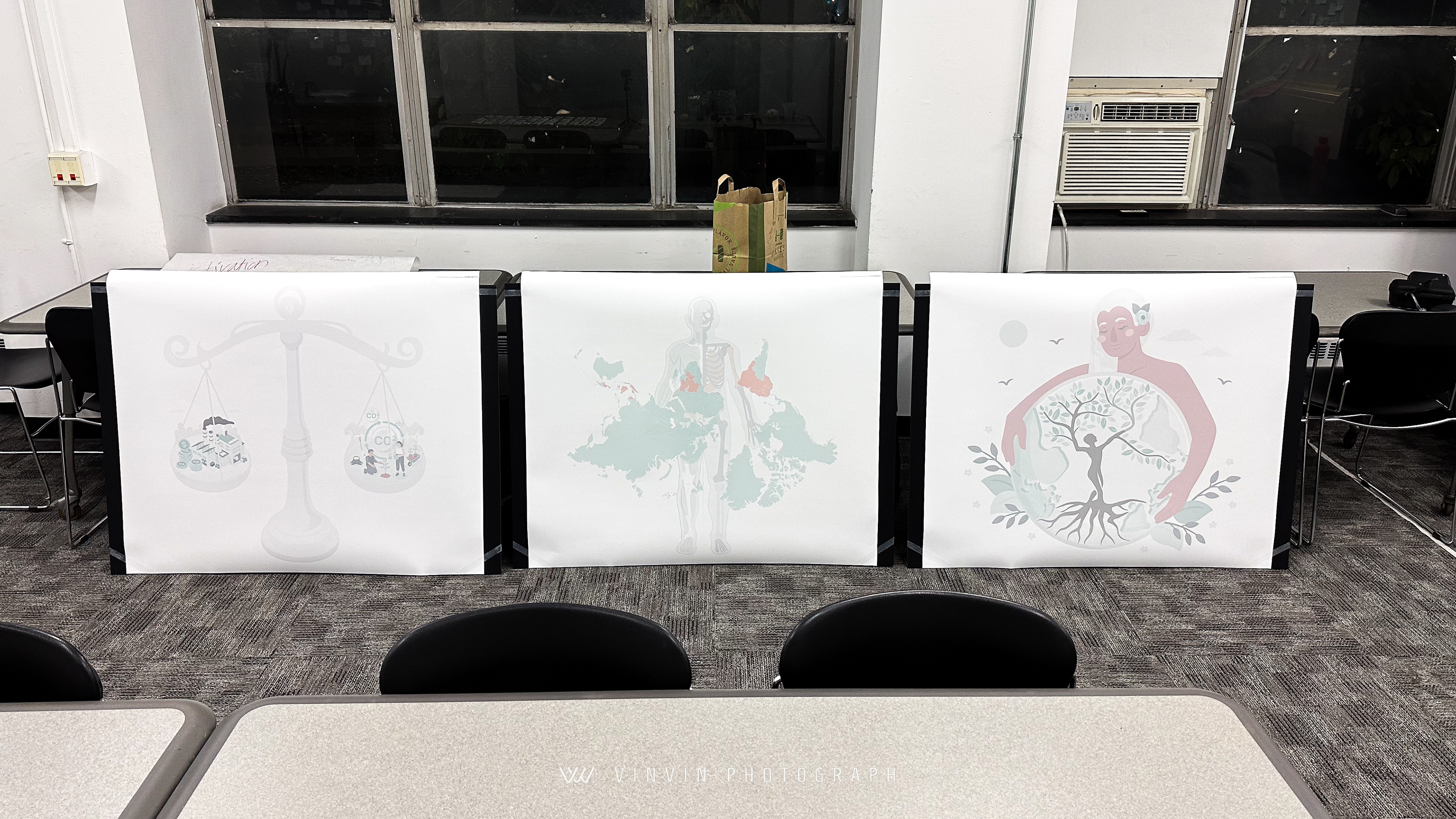
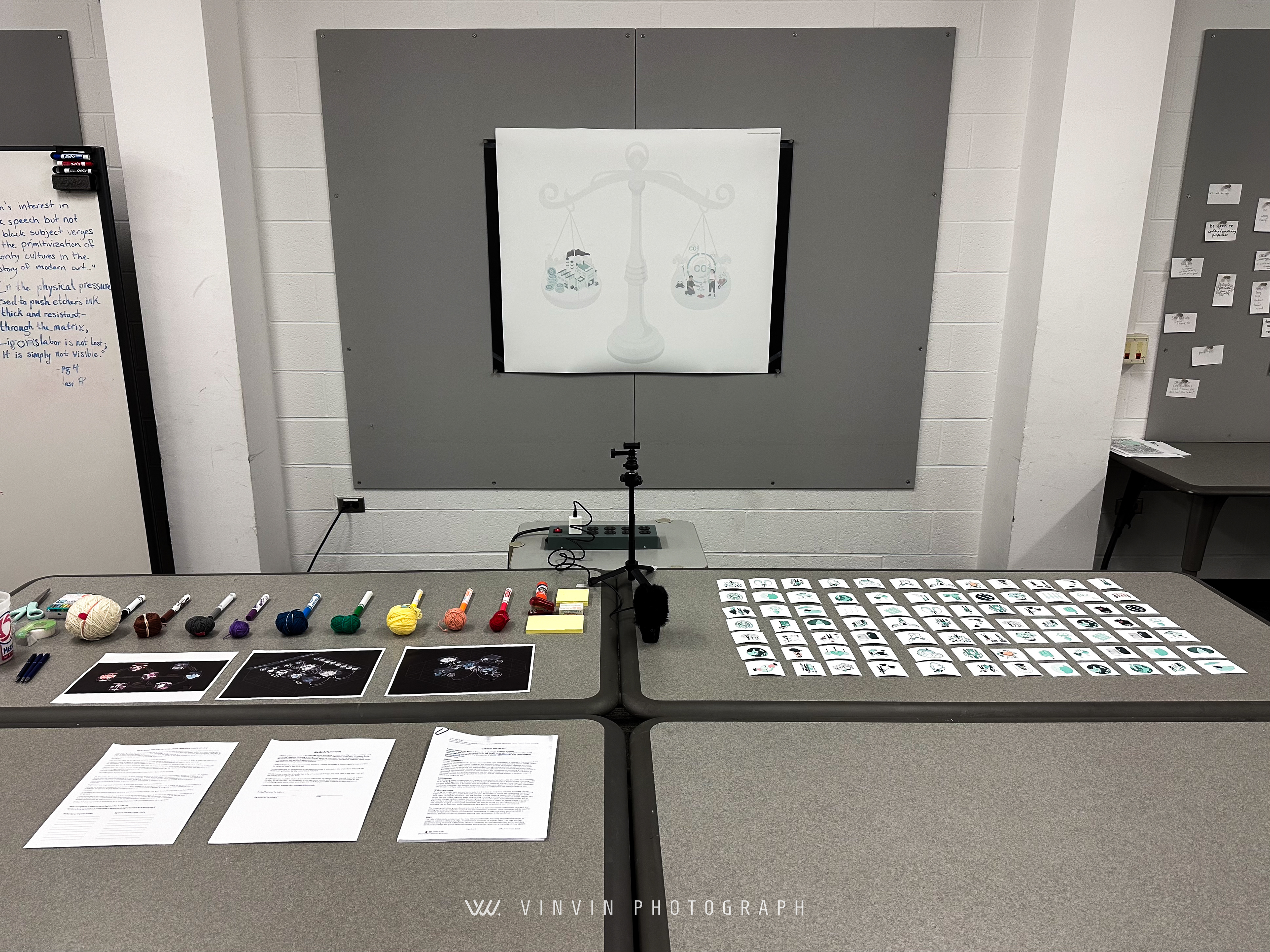
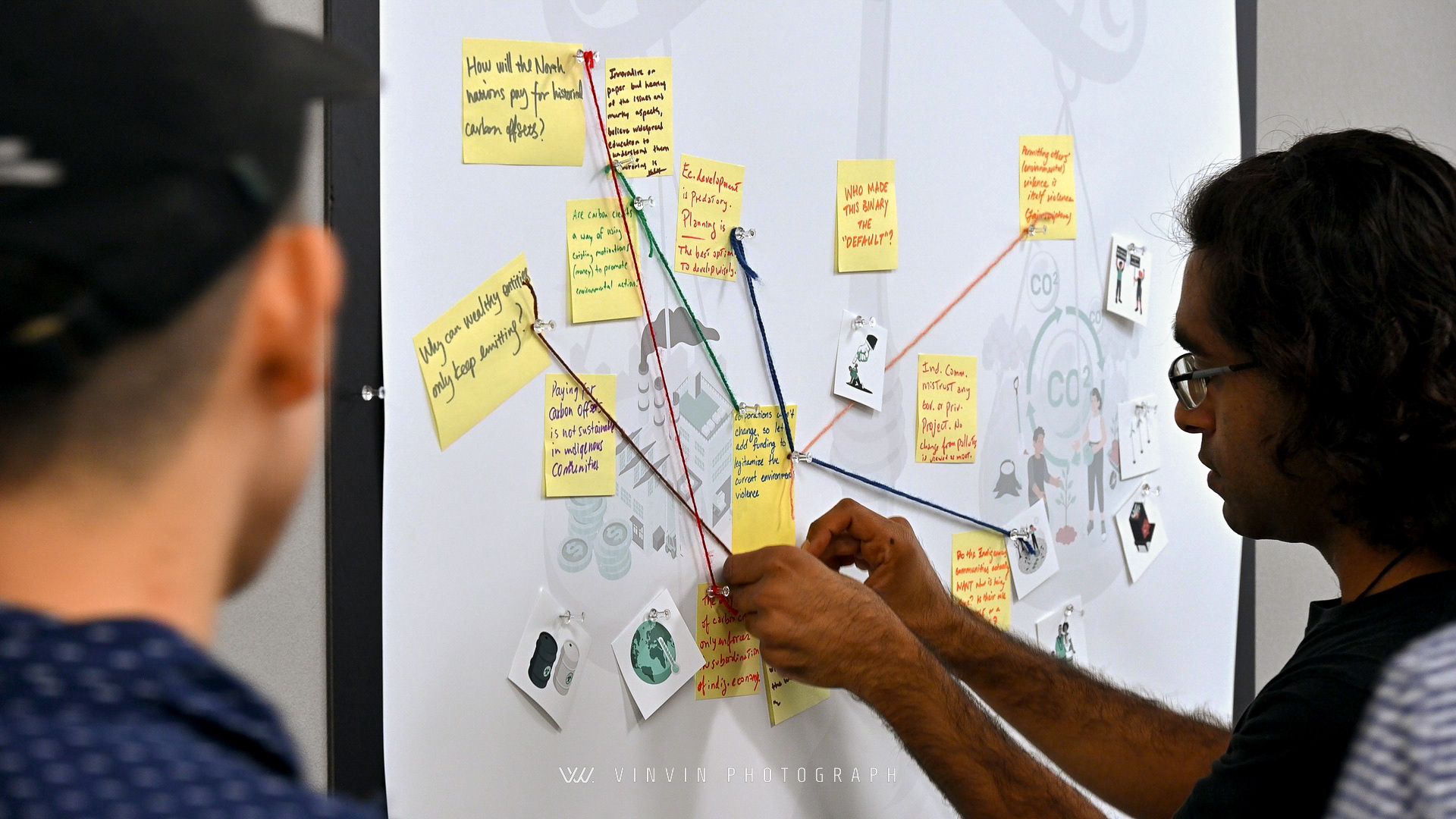
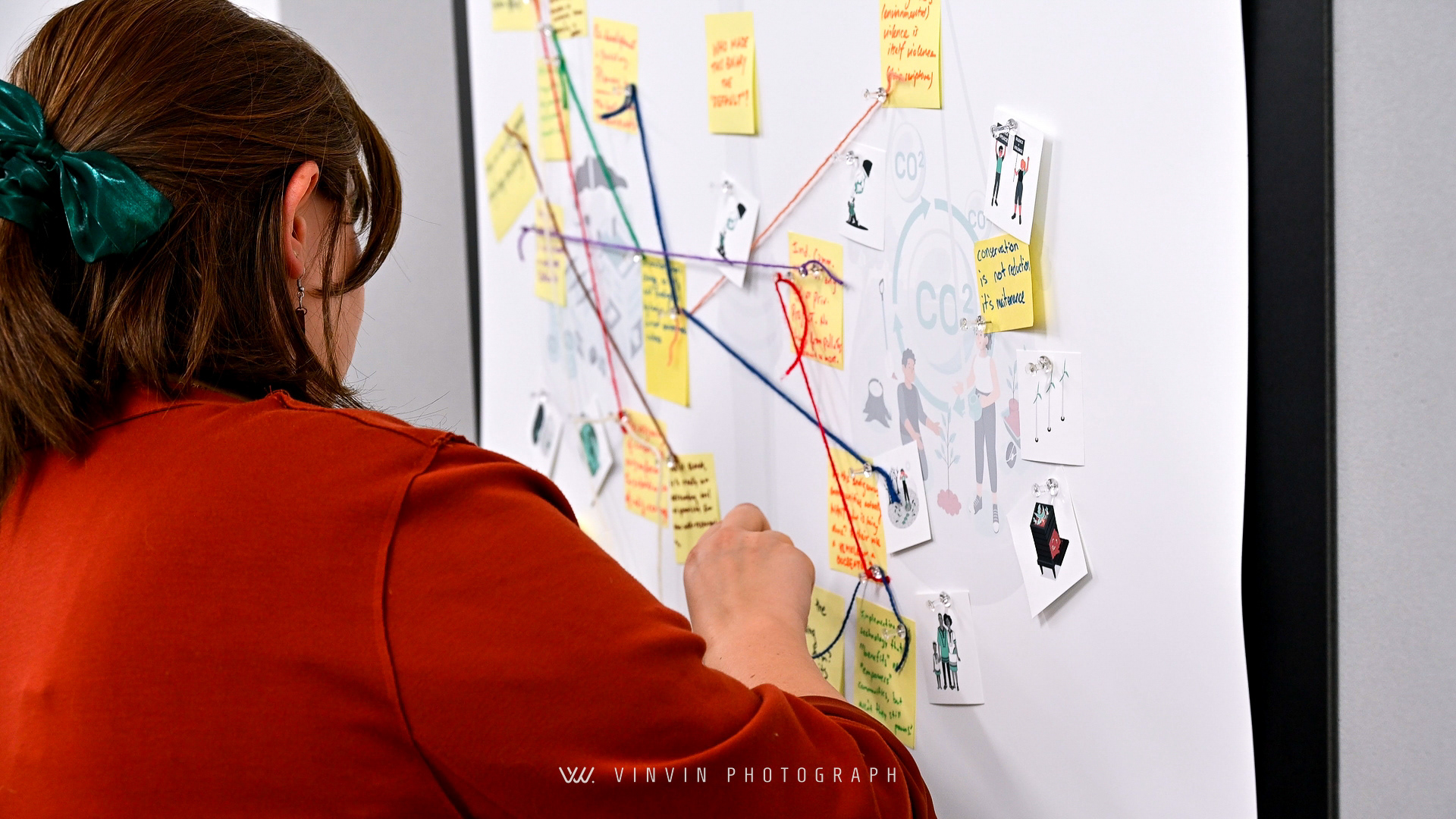
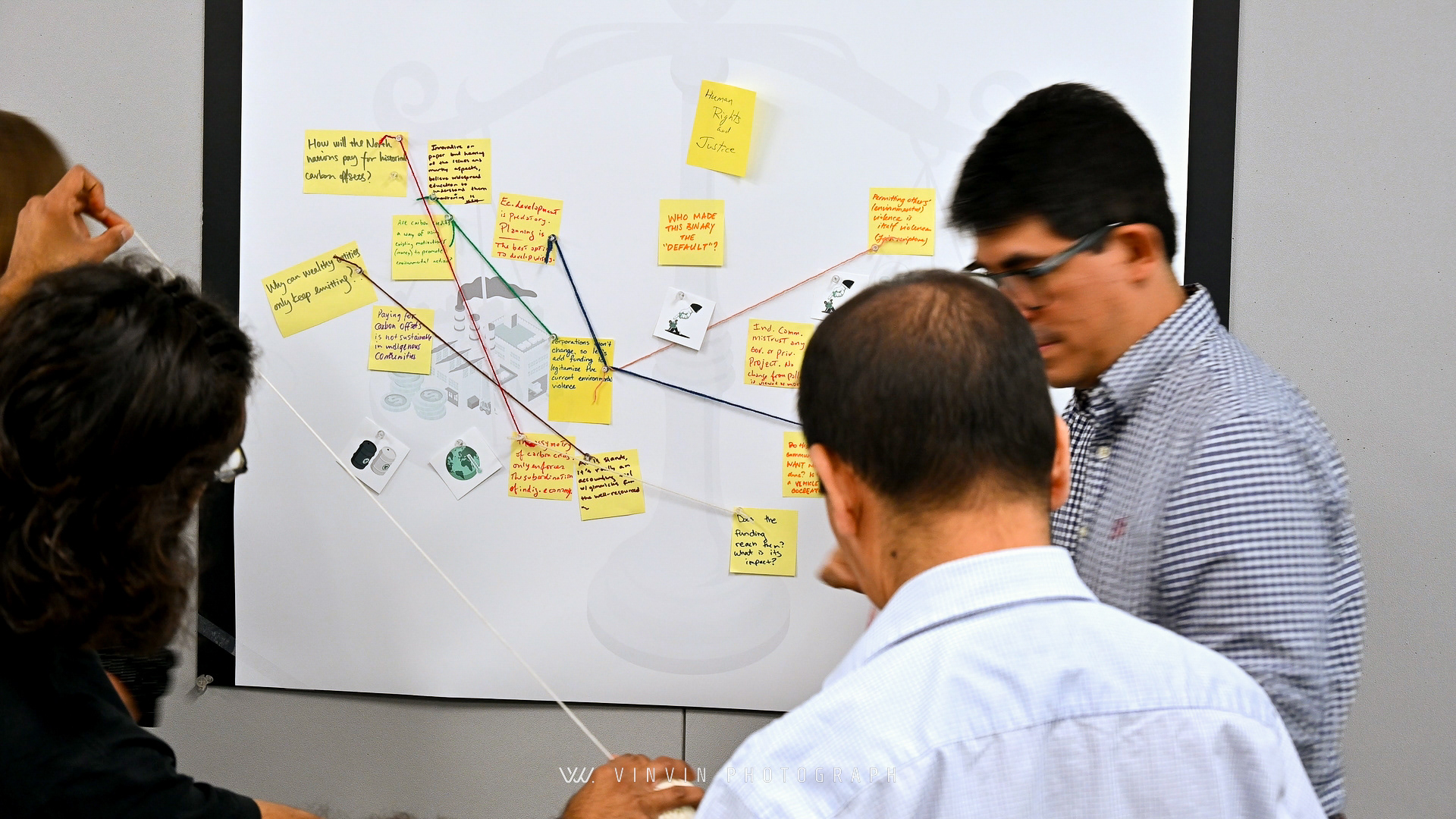
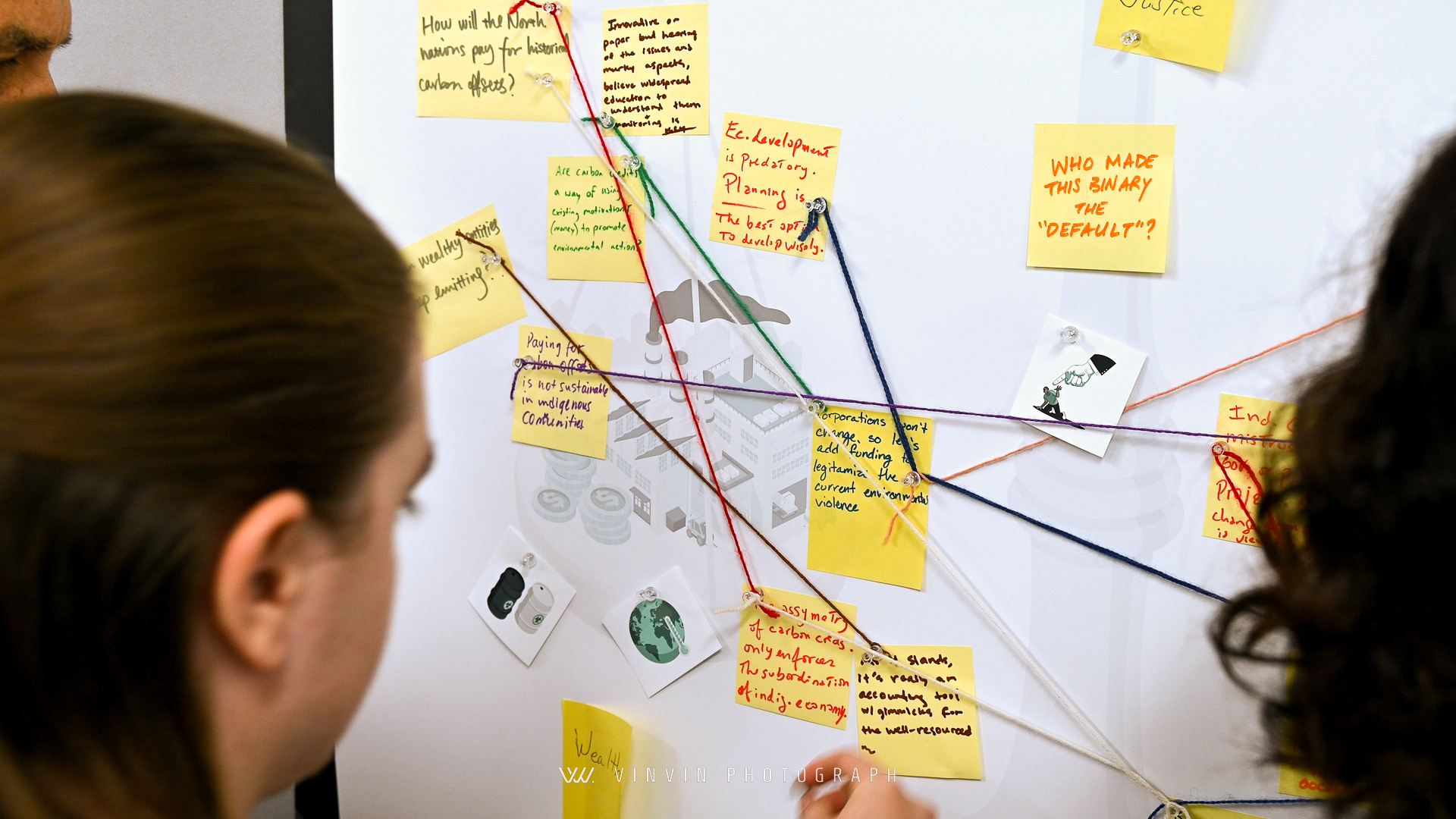
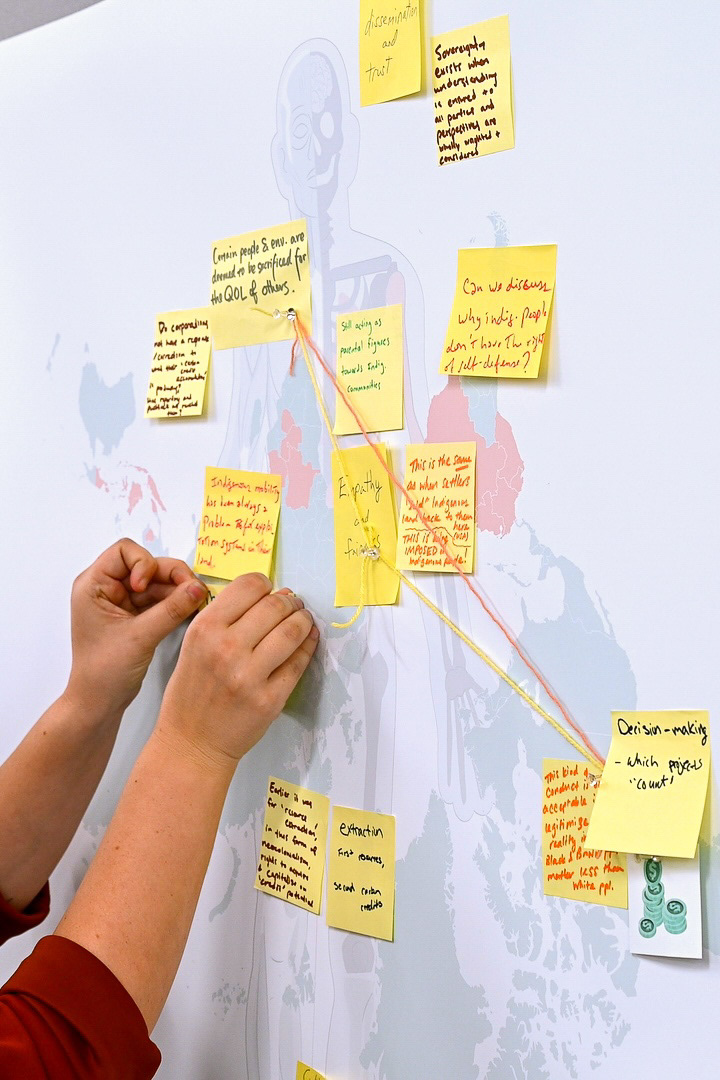
How might we challenge the coloniality embedded in carbon markets and advocate for pluriversal ways of knowing and being beyond Western isolationism, positivism, and colonialism? This workshop offers a collective, reflexive, and participatory pathway. Following the IRB recruitment protocol, I hand-picked faculty, campus sustainability staff, and graduate students from the University of Illinois Urbana-Champaign, whose knowledge backgrounds resonate with the carbon market system. Using written words, drawings, printed visuals, and connective threads through mapping, participants visualize how offsetting practices shape neocolonial relationships between people, land, and governance, while surfacing lived experiences, emotions, spirituality, interconnectedness, and traditional knowledge that conventional techno-managerial paradigms often erase.
This site presents findings from the workshops, including a documentary, visual narratives, audio maps, and interpretive commentary that connect participants’ maps to broader debates on climate governance, knowledge justice, and decolonial practice.
* This research receives a UIUC IRB-determined exemption. All necessary media release consents from participants have been obtained.
Documentary Trailer
Documentary Full Film
Chapter 1, Carbon Market & Offsetting
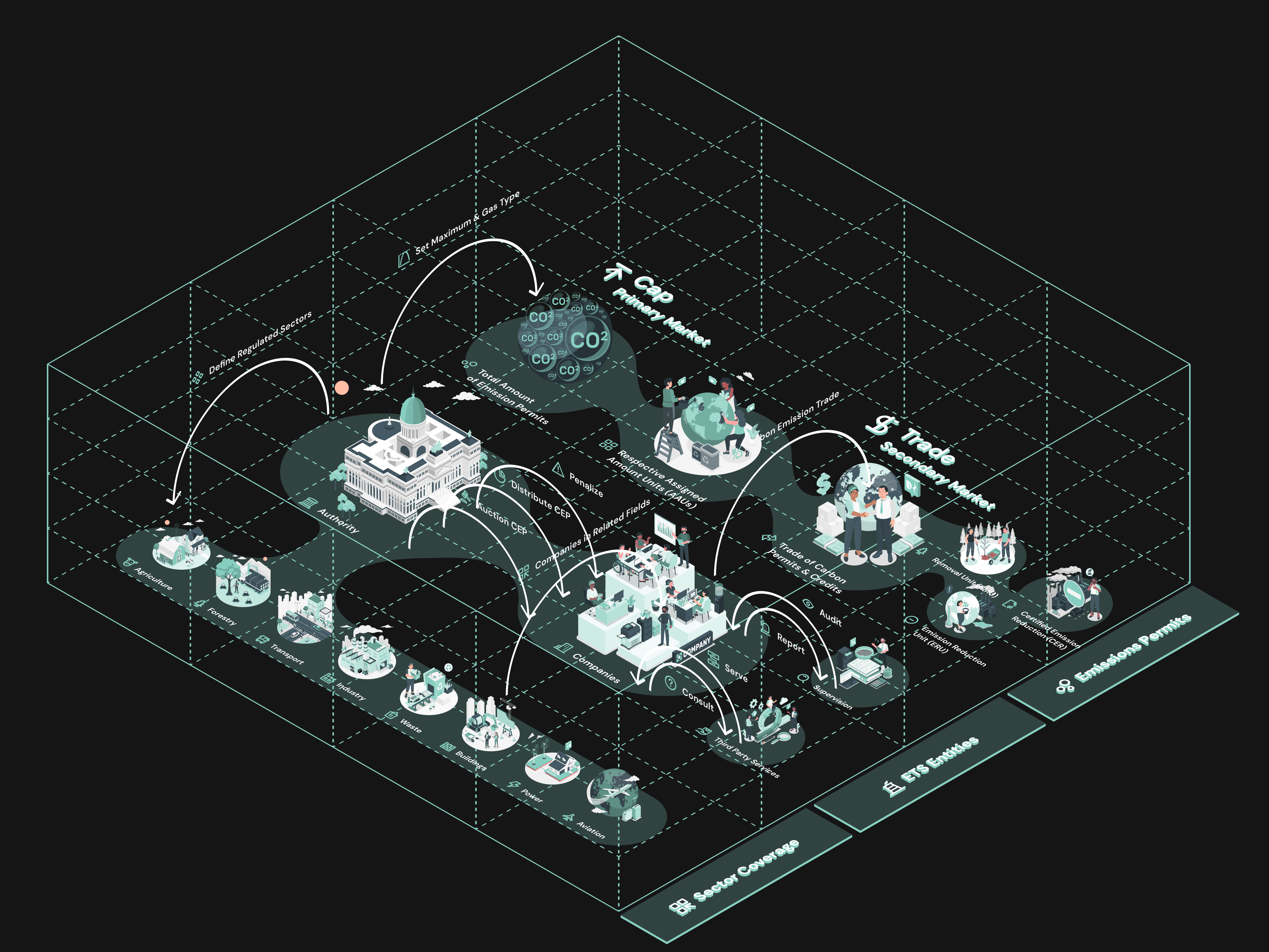
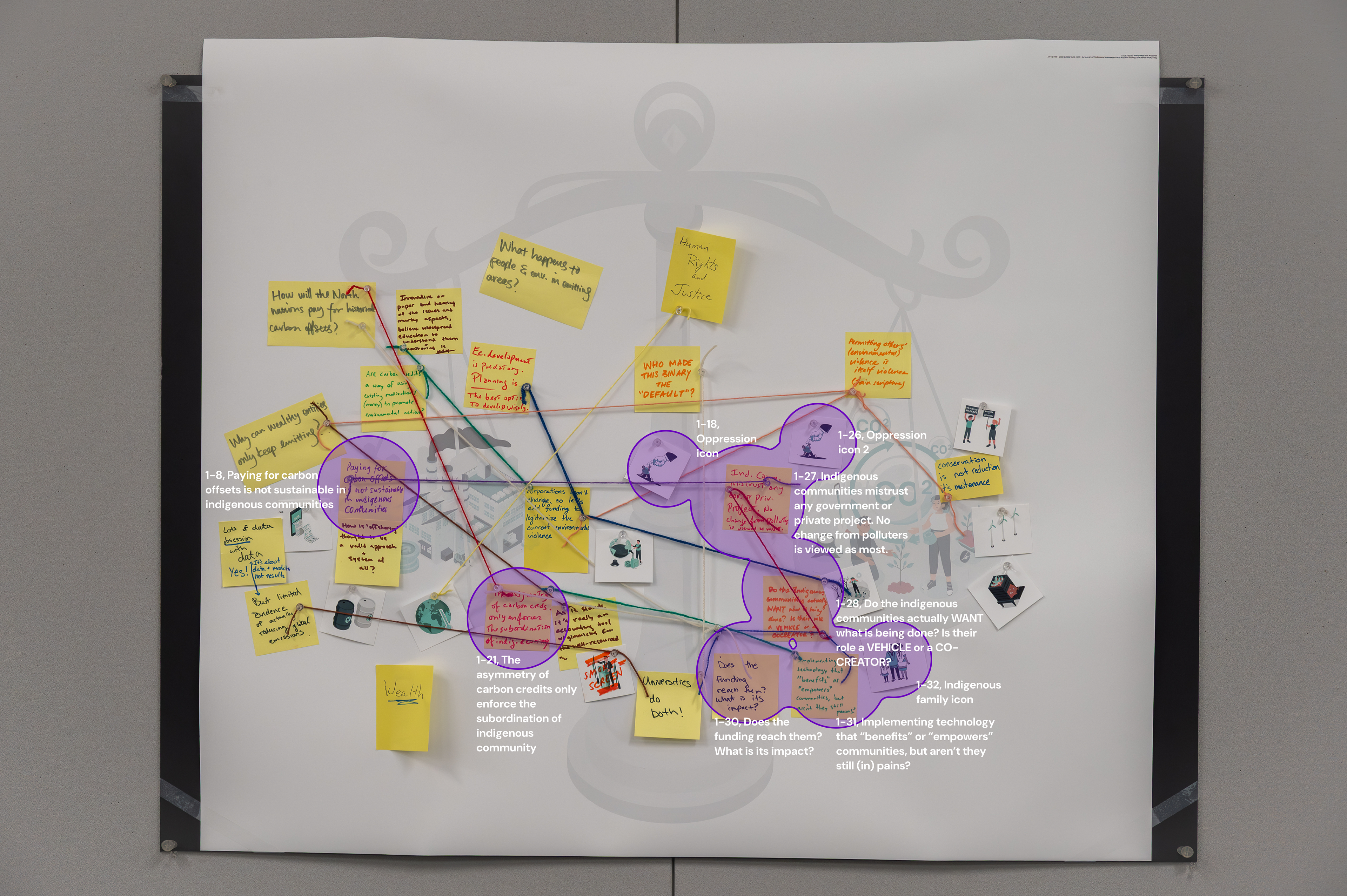
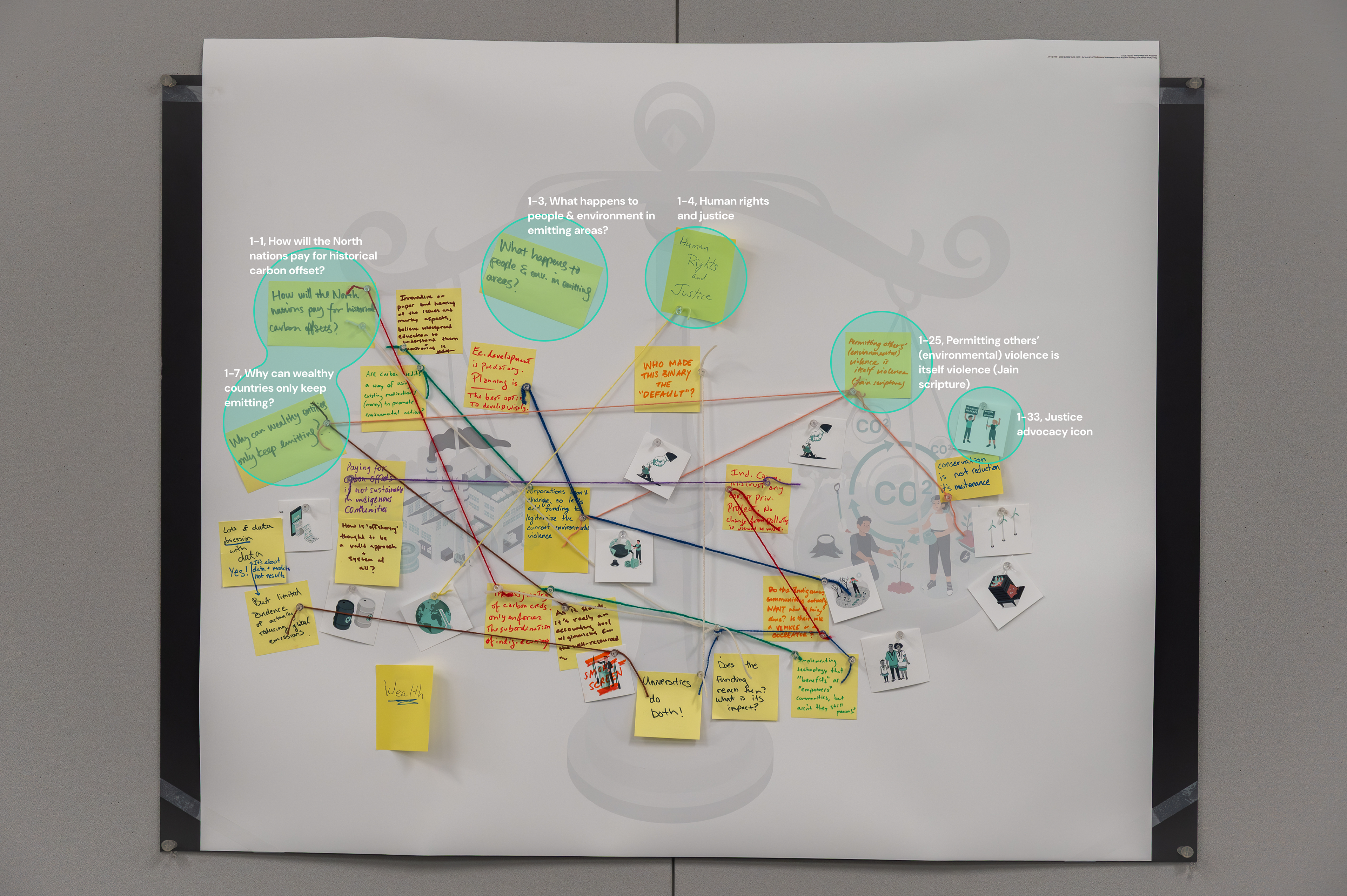
The first mapping session focuses on carbon markets and offsetting as a market intervention for climate change: how they work, what benefits they promise, and how they deliver or do not deliver those benefits. After the researcher presents introductory materials on the concepts of carbon markets and offsetting, including the Voluntary Carbon Market (VCM) value chain and operations, as well as the "triple win" claim for nature conservation, economic development, and poverty alleviation (McAfee, 2016), participants were invited to express their thoughts, ideas, and emotions about carbon markets and offsetting creatively on the map. During this participatory and collaborative process, they explored the political nuances, socioeconomic impacts, and institutional legitimacy of this market-based climate change solution.

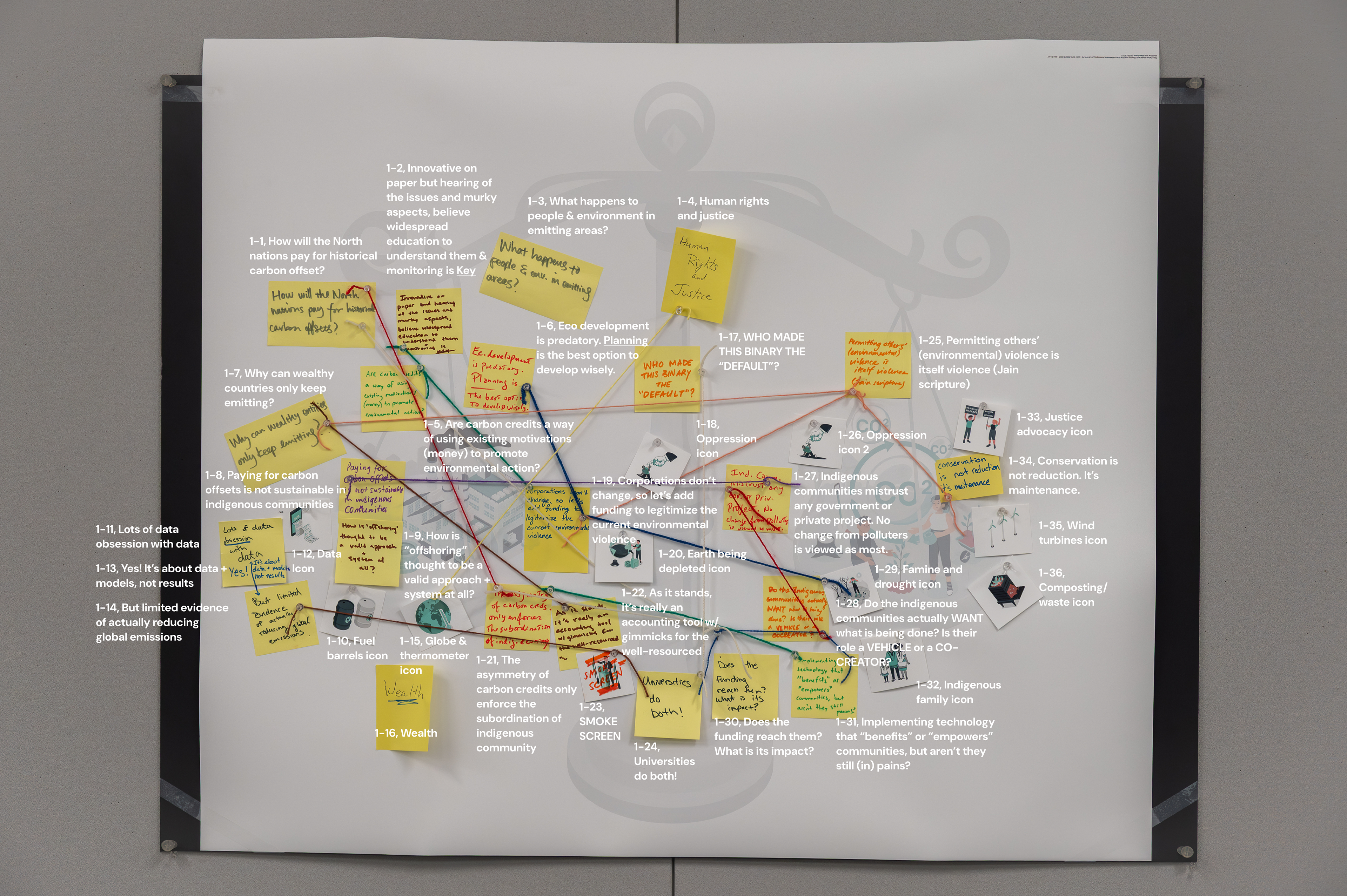
Carbon market and offsetting (C1) annotated
Audio-Visual Maps
Click to play the audio recordings. The visual references are below.
Data Obsession
“All models are wrong, but some models are useful.” This reflection highlights the obsession with data in Western and industrial contexts, where data often serves as a proxy for truth and progress. Yet, data often captures expectations, not outcomes. In carbon markets, this obsession turns climate action into numerical abstraction: simplified, predictable, and detached from lived behavior. The system rewards measurement, not transformation.
Conservation Is Not Reduction — It’s Maintenance
This reflection begins with a personal story: learning about carbon offsets through aviation offset campaigns. It revealed how offsetting doesn’t reduce emissions, but only balances them on paper. Individuals and corporations may feel more “conscious” of cost, but behavior rarely changes. As that participant put it, “Conservation is not reduction; it’s maintenance.”
"Benefits" for Whom? Climate or the Communities
Here, the conversation is connected to carbon capture and storage in Champaign, IL. One participant voiced concern about aquifers, drinking water, and community consent. Even when technologies promise climate benefits, they can endanger local ecologies and lives. The key question emerges: Who decides what’s good or bad, and for whom? True justice demands that affected communities define their own risks, priorities, and futures.

Data Obsession
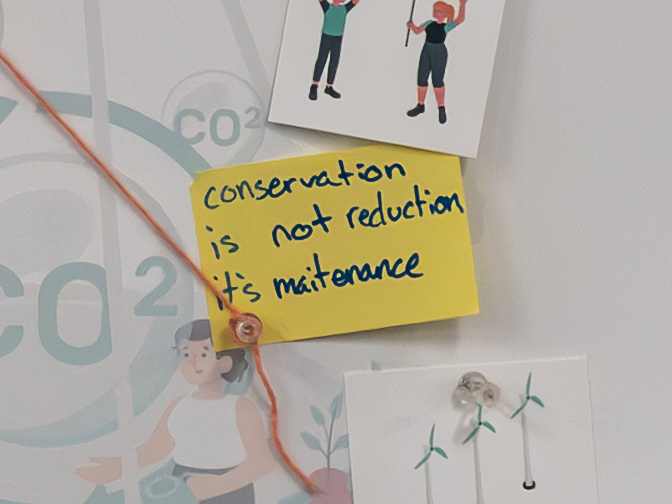
Conservation Is Not Reduction — It’s Maintenance
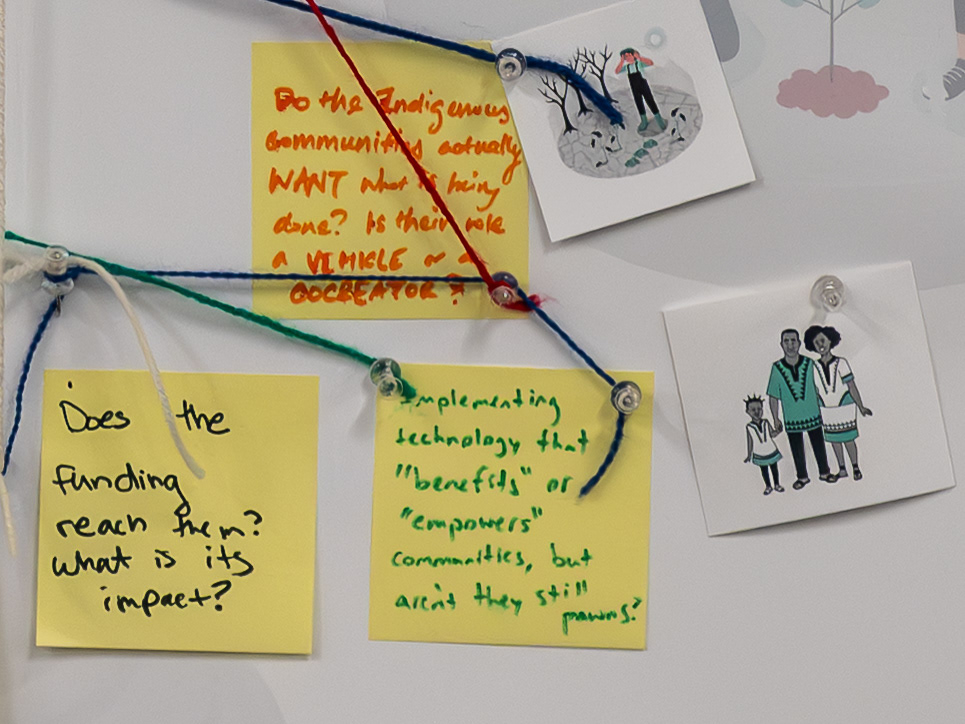
Benefits" for Whom? Climate or the Communities

C1_Carbon market critiques
Critiques of Carbon Offsetting
- Clustered on the left side (Global North, problem side) of the map
- Perpetuation of growth narrative: Monetary incentives and eco-development
- Emphasis on positivist logics: obsession with data and models
- Painkiller solutions: not contributing to real emission reduction and corporate changes
- Institutional critiques: questions on the legitimacy and predatory nature of the policy
C1_Community impacts
Community Impacts
- Clustered on the right side (Global South, Solution side) of the map
- Hegemonic power system: oppression and subordination of Indigenous communities
- Lack of agency and self-determination under complicit government and market schemes
- Questionable benefit sharing and extraction in disguise
- Local livelihood affected: unsustainability and less resource access
C1_Justice & equity
Justice & Equity
- Historical justice: the payment of historical emissions is not discussed in offsetting
- International justice: wealth/underdeveloped gap in carbon emissions
- Institutional violence: permission of pollution is essentially violence
- Local injustice: nuances in the North/South binary; communities harmed in the Global North should not be invisible
Chapter 2, Environmental Neocolonialism
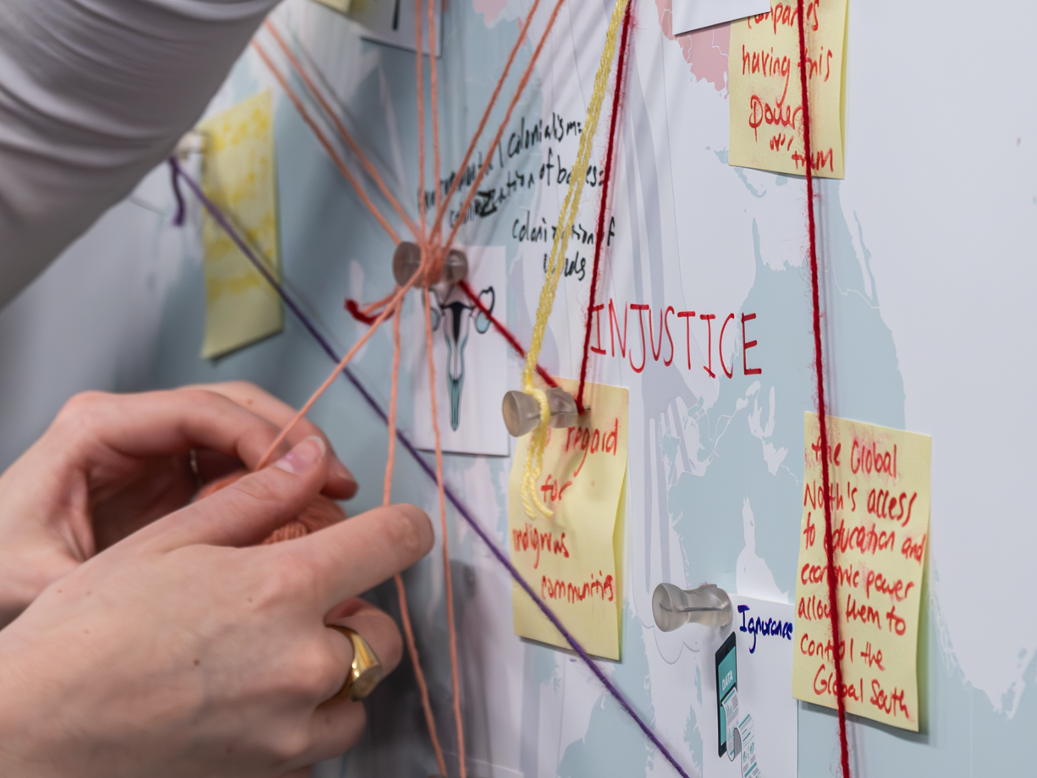
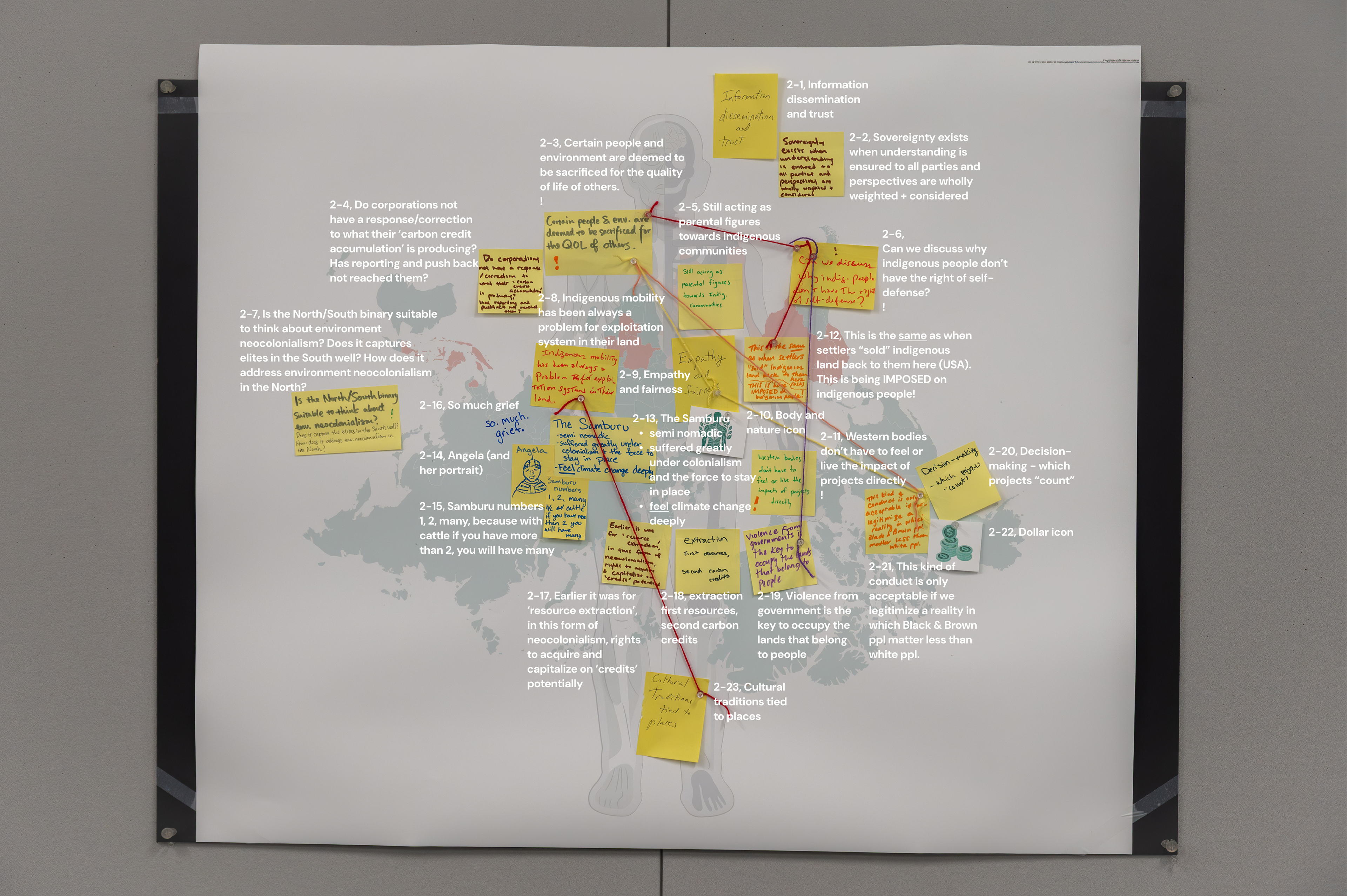
The second mapping practice focuses on the impacts of the so-called market solutions imposed on local and Indigenous communities, drawing research from Carbon Brief on the negative effects of carbon offset projects worldwide, as well as my own case study research in 10 REDD+ carbon offset projects from Southeast Asia, Latin America, and Africa. To further illustrate the neocolonial sufferings, I screened an excellent documentary from Deutsche Welle (DW), "Stolen Lands, How Big Tech’s carbon offsets are threatening Kenyans", which captures the inhumane violence in the Northern Kenya Grassland Carbon Project (NKCP). With the heavy emotions from the materials and the documentary, participants are invited to again express their thoughts, ideas, emotions, and more on the map, making visible the neocolonial impacts imposed on local communities and embodying the entanglements of violence against land, knowledge, and autonomy.
Environmental neocolonialism (C2) annotated
Audio-Visual Maps
Click to play the audio recordings. The visual references are below.
Nuances Within the North–South Binary
One participant questioned the simplicity of the Global North–South divide. Drawing from his Jain background, he reflected on how colonialism restructured hierarchies. The British reinforced casteism in India, and those once marginalized have since reproduced similar power patterns. This reflection complicates binaries: domination and coloniality don’t stop at borders; they circulate through culture, faith, and history, shaping how oppression continues from within.
Repurposing "Violence" to Maintain Power
The discussion revealed how violence is selectively condemned, only when it threatens the power-holders. Participants noted that in extractive economies, violence against the land and marginalized peoples is normalized, even invisible, while acts of resistance are criminalized. Violence, once a weapon of liberation and autonomy, becomes repurposed to maintain power and order. It’s the same logic across industries built on exploitation: the powerful decide what counts as “peace.”
The Samburu | Identity, Worldview, and Lived Experience
One participant brought visibility to the Samburu people in Northern Kenya from the documentary. As she mentioned, not naming the Samburu in the video or maps is itself a colonial erasure. Naming becomes an act of respect and decoloniality. Their numbering system links directly to their cattle, kinship, and cosmology. Yet, carbon offset projects now restrict their nomadic grazing, mirroring earlier colonial controls over land and movement. This is a loss not only of livelihood but of identity, worldview, and cultural values.
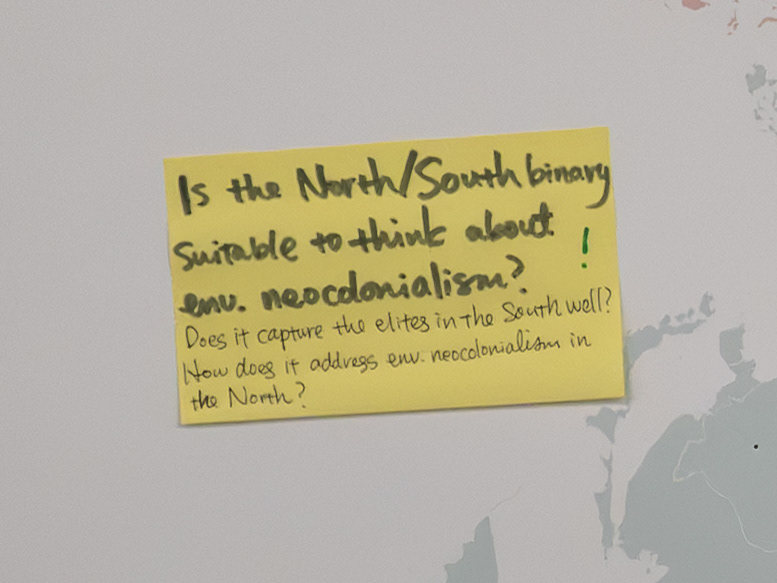
Nuances Within the North–South Binary
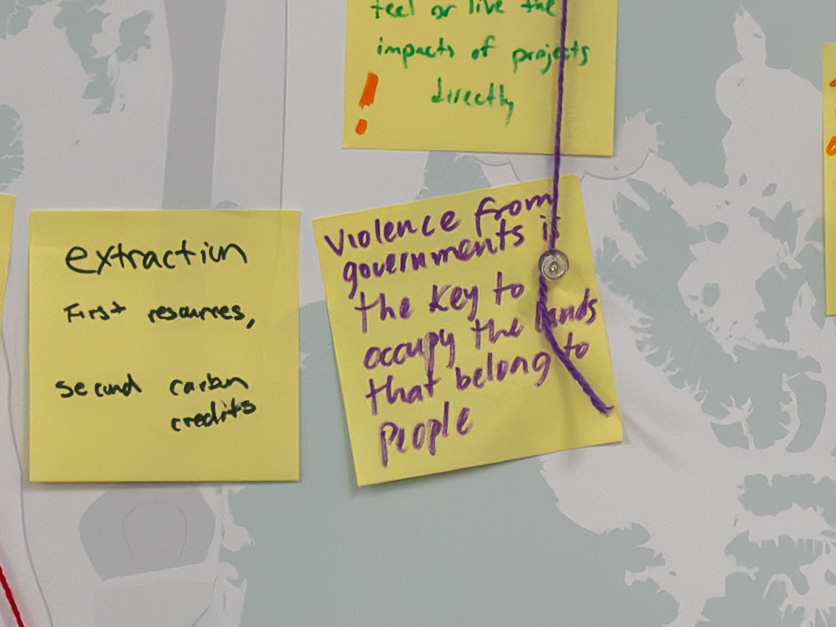
Violence to Maintain Power
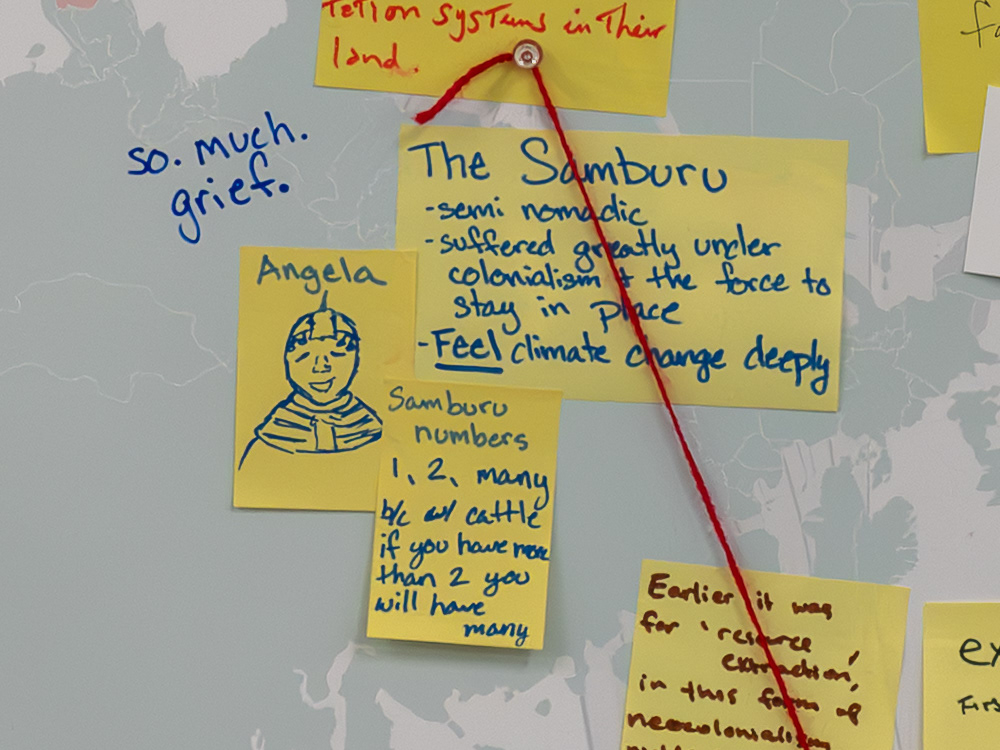
The Samburu | Identity, Worldview, and Lived Experience
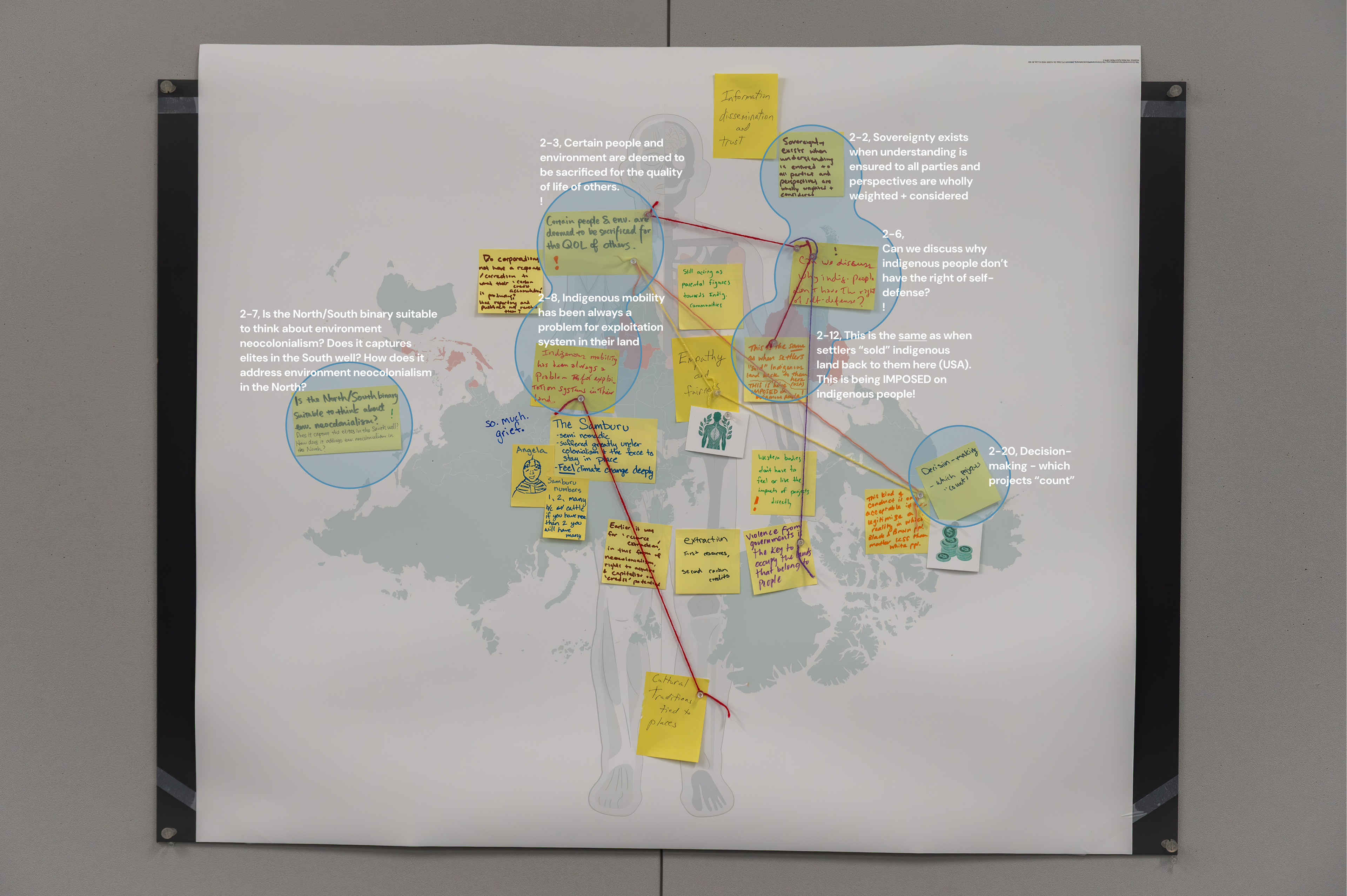
C2_Sovereignty & rights
Sovereignty & Rights
- Rights to resistance: Loss of the agency of communities to defend themselves; being deemed "sacrificable."
- Land rights and dispossession: mobility struggles, colonial land seizure. and the irony of selling land back to communities
- Rights for consent and decision making: free, prior, informed consent, consultation, and equitable decision making are absent
- Sovereignty across scales: critiques of global binaries while recognizing elite captures in the South and colonialism in the North
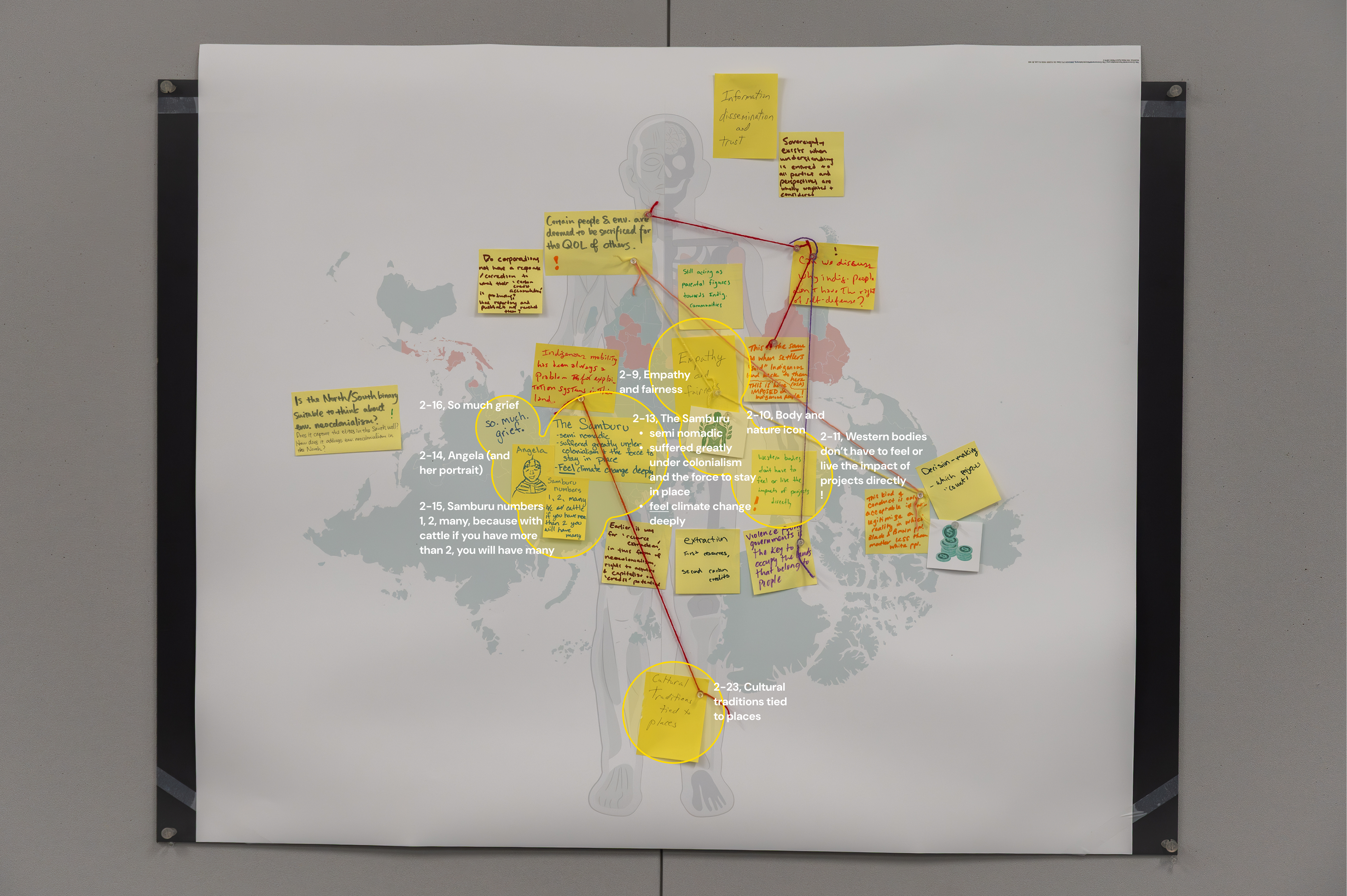
C2_Embodiment, affect & lived impacts
Embodiment, affect & lived impacts
- Emotive reflections from the documentary about the Northern Kenya Grassland Carbon Project (NKCP), grief, empathy, and more
- Embodied climate experience: engagement with the Samburu tribe, memory-scape, and the importance of tribal identity; humanization of their struggles
- Place-based knowledge: cultural traditions and the local numbering system
- Somatic understandings: different bodily feelings are tied to the imbalanced powers
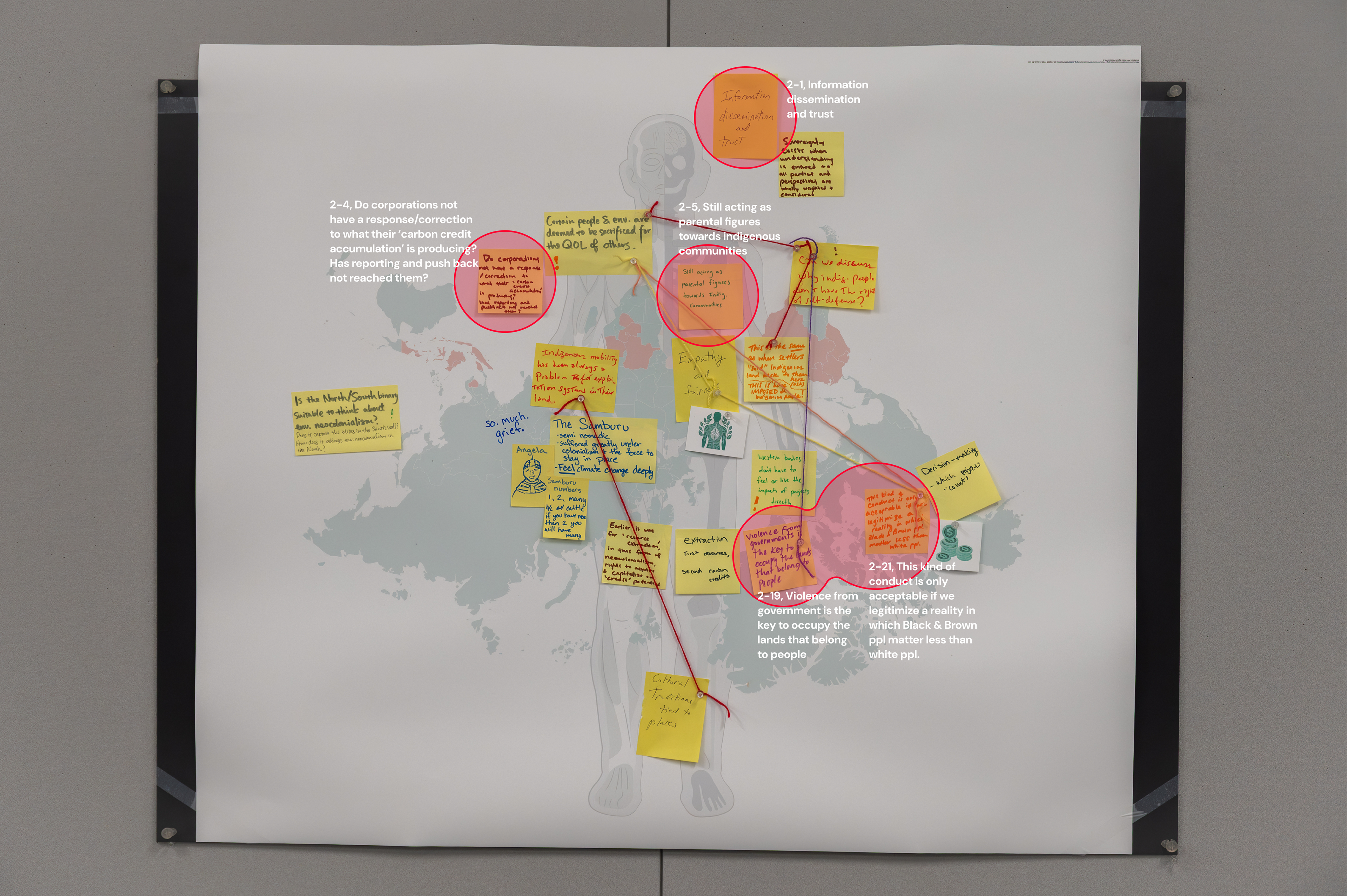
C2_Governance, accountability & institutional violence
Governance, accountability & institutional violence
- Institutional transparency: murky information dissemination and lack of trust
- Institutional paternalism: the market schemes impose paternal oppression on the local communities
- Corporate accountability: questions on the inaction of corporations for their unethical practices
- Local governmental violence: complicit in grabbing Indigenous lands
- Racial violence: the system views black and brown people as less important
Chapter 3, Decolonial Climate Justice Future
The third mapping practice shifts the focus from the present to the future, from material and ontological violence to epistemological emancipation. What would a decolonial climate justice future look like? What knowledge and modes of knowledge production should we emphasize? I presented several statements from different Indigenous communities opposing carbon offsets and advocating for land rights, sovereignty, and alternative ways of being and knowing. I also played a podcast clip from Mongabay Newscast featuring Indigenous photographer Kiliii Yüyan. In the clip, Yüyan discusses the importance of traditional ecological knowledge (TEK) and the Indigenous epistemology of "two-eyed seeing, " while explaining why supporting Indigenous communities is the easiest and most effective way to achieve conservation goals. Participants then mapped what a pluriversal future that renders care to Indigenous communities, alternative epistemologies, and radical justice would look like, as well as how to achieve it.
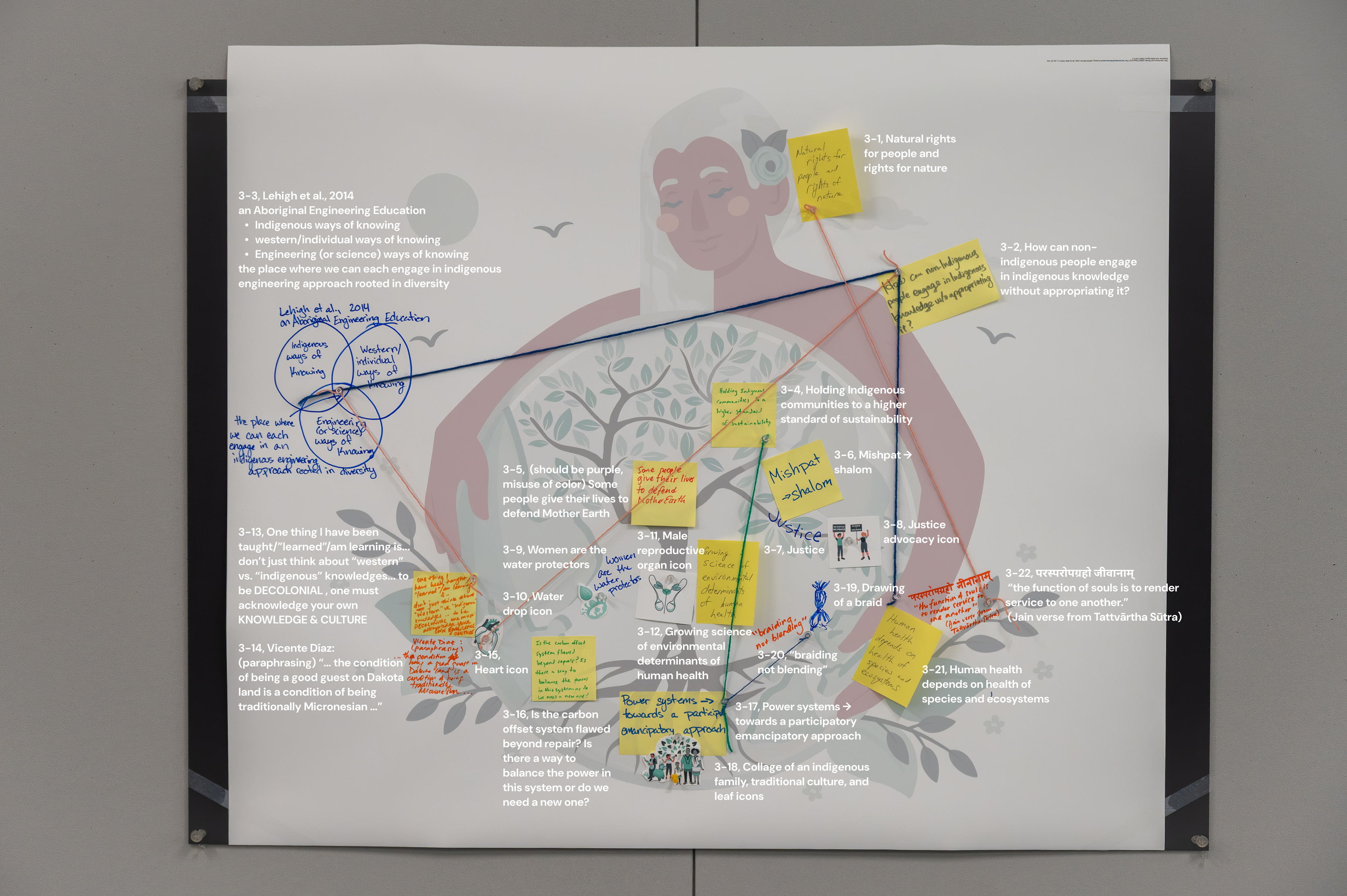
Decolonial climate justice future (C3) annotated
Audio-Visual Maps
Click to play the audio recordings. The visual references are below.
Positionality and Respectful Engagement
Participants discussed how engaging Indigenous knowledge systems requires self-positioning and humility. One referenced the Lehigh Aboriginal Engineering Model (Lehigh et al., 2014), which allows engineers to integrate Indigenous ways of knowing without claiming indigeneity. Another reflected on his own missteps, approaching Indigenous communities without acknowledging his cultural grounding. For non-Indigenous scholars to engage ethically, they must recognize their non-Indigenous cultural background and values, not wearing “a colonial skin” of inauthentic appropriation.
Braiding Together with Humans and Living Earth
Drawing on Braiding Sweetgrass by Robin Wall Kimmerer, one participant reflected on the idea that humans need not disappear for the Earth to thrive. We can live with the Earth, not apart from it. Humans are another ecosystem. “Braiding” becomes a metaphor for coexistence: interweaving without erasure. It’s not about blending identities or color-blind harmony, but about honoring difference and reciprocity across beings and worlds.
This audio piece is a collage of 3 recordings. One from the first map and two others commenting on that during this map.
Against the Romanticization of Indigeneity
Participants challenged the tendency to frame Indigenous peoples as inherently environmentalist. One noted that there are also Indigenous actors who harm the environment. Idealization is still erasure. Another added that such romanticism outsources responsibility, placing the burden of ecological repair on Indigenous communities alone, as they have the knowledge and practices. Instead, we must see stewardship as a shared ethical practice, not a role assigned by colonial guilt.
This audio is also a collage of 3 recordings on religions and epistemologies, in dialogue and complementary with each other.
Dual Positions of Faith and Religion in Nature
Participants reflected on the complex roles of religions in shaping humanity’s relationship with nature. One participant from a Christian background spoke of the patriarchal and puritan legacy of Christianity that underpins nature-culture dualism and environmental exploitation. The other commented that faiths can be appropriated or weaponized for establishing conservative norms. On the other end, however, faiths can guide healing and reconnection. One cited the Jain scripture, “the function of souls is to render service to one another,” emphasizing interdependence as a foundation of justice. The other drew from Hebrew traditions, linking Mishpat (justice) to Shalom (well-being), as an ethic of active justice and reciprocity.
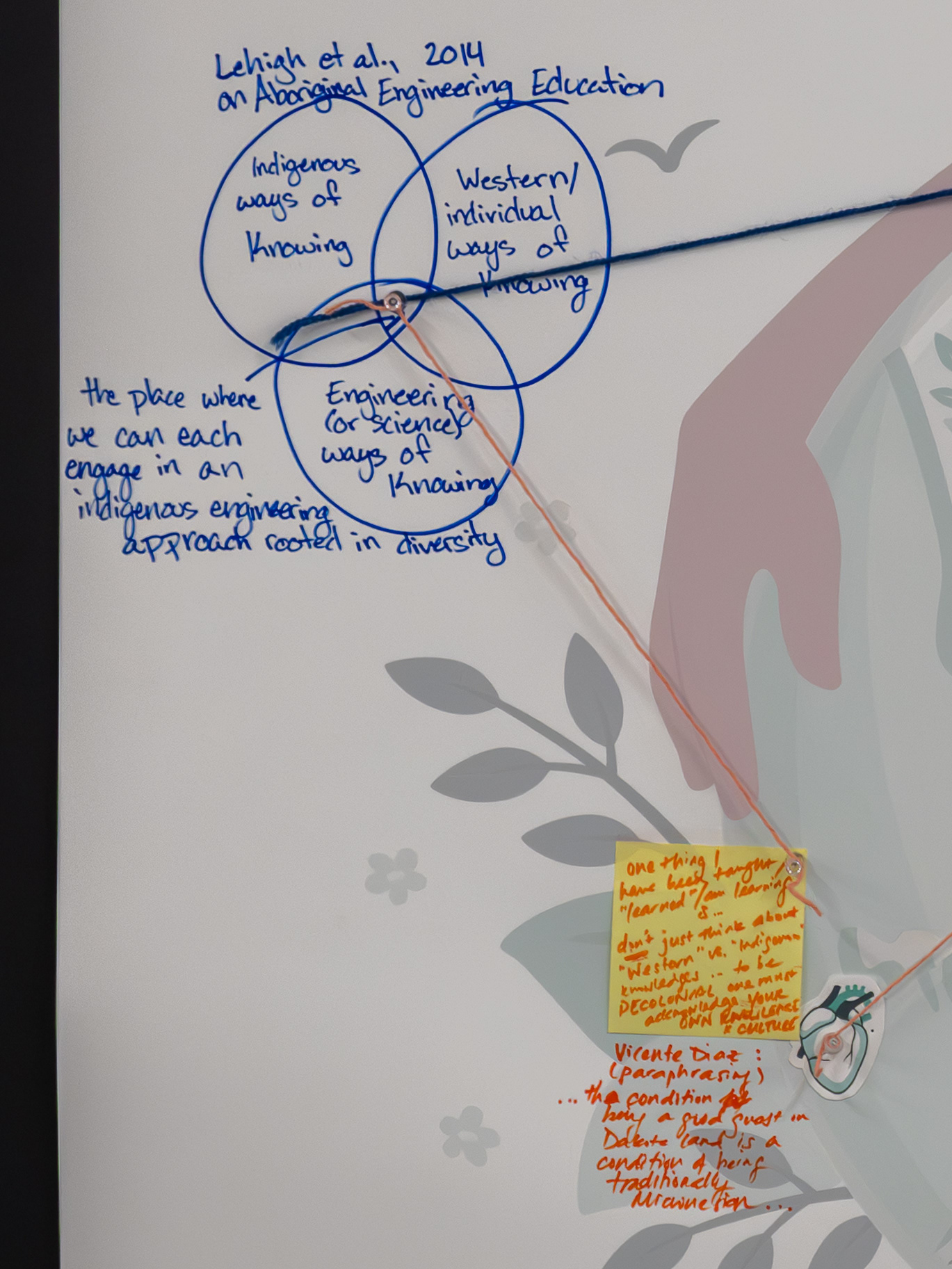
Positionality and Respectful Engagement
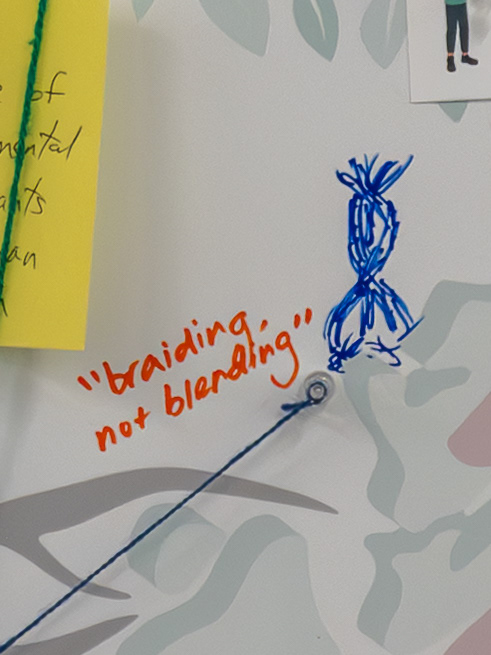
Braiding Together with Humans and Living Earth
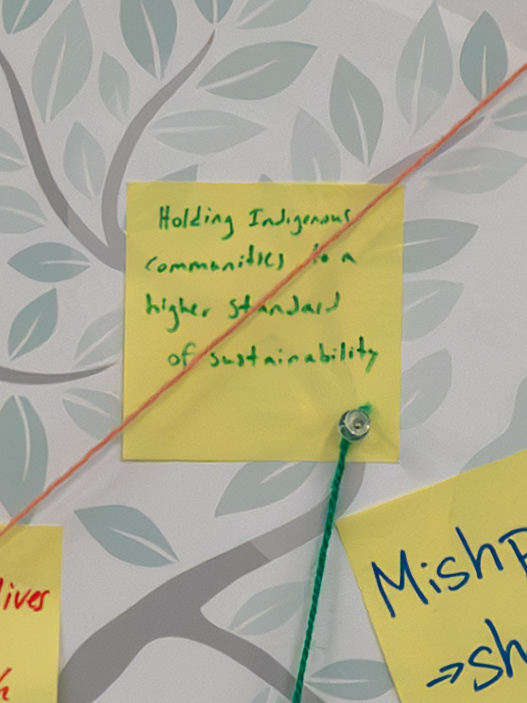
Against the Romanticization of Indigeneity
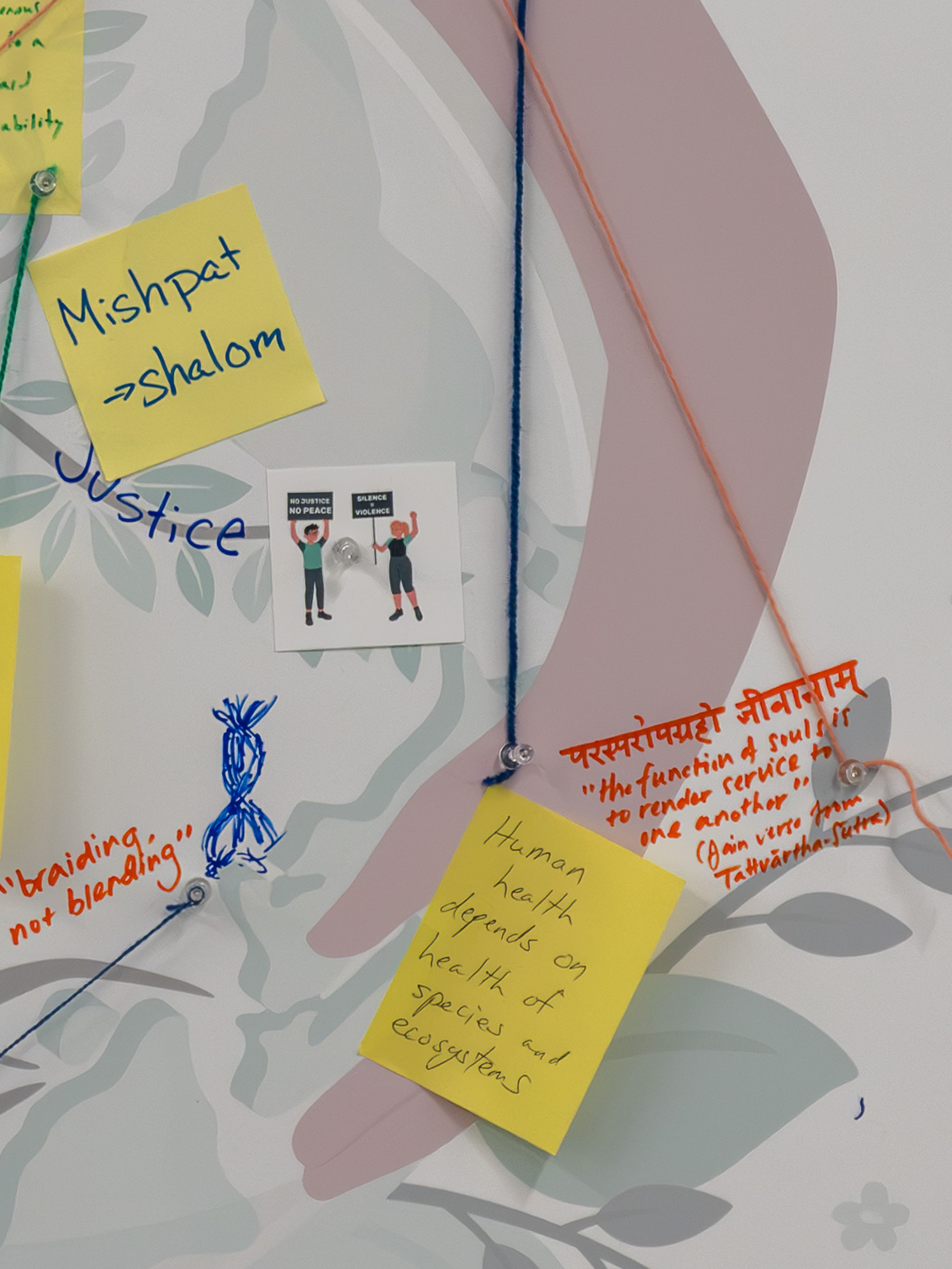
Dual Positions of Faith and Religion in Nature
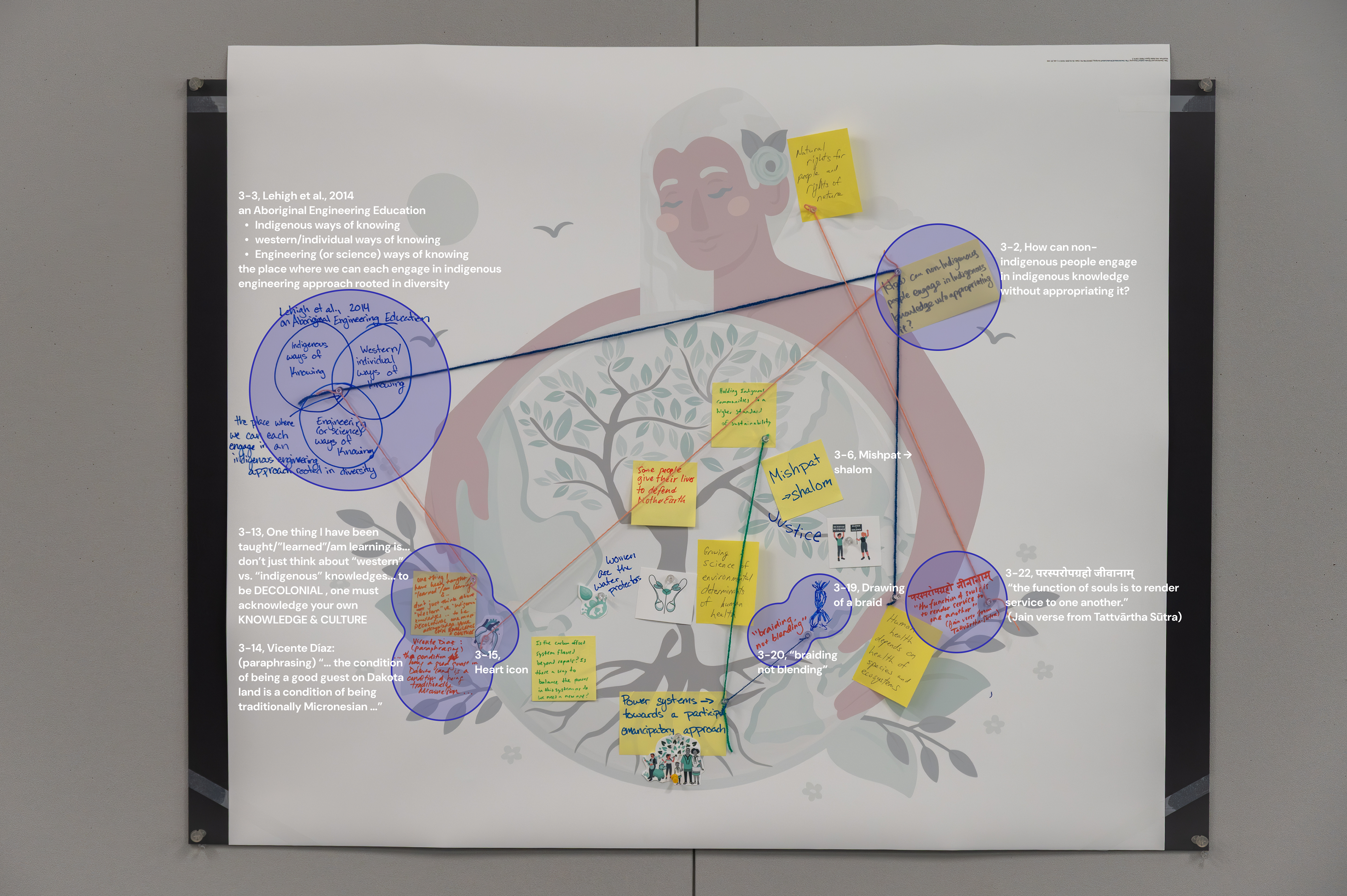
C3_Knowledge production
Knowledge Production
- Emphasis on Indigenous ways of knowing, and also the caution against appropriation
- Positionality in knowledge production: acknowledge your own non-indigenous, cultural, and value backgrounds
- More than two-eyed seeing: the intersection of different epistemologies, Western science, Indigenous ways of knowing, and individual ways of knowing
- Faith and spirituality: the Hebrew beliefs, Mishpat to Shalom (justice to well-being), and the Jain verse, interdependence towards justice
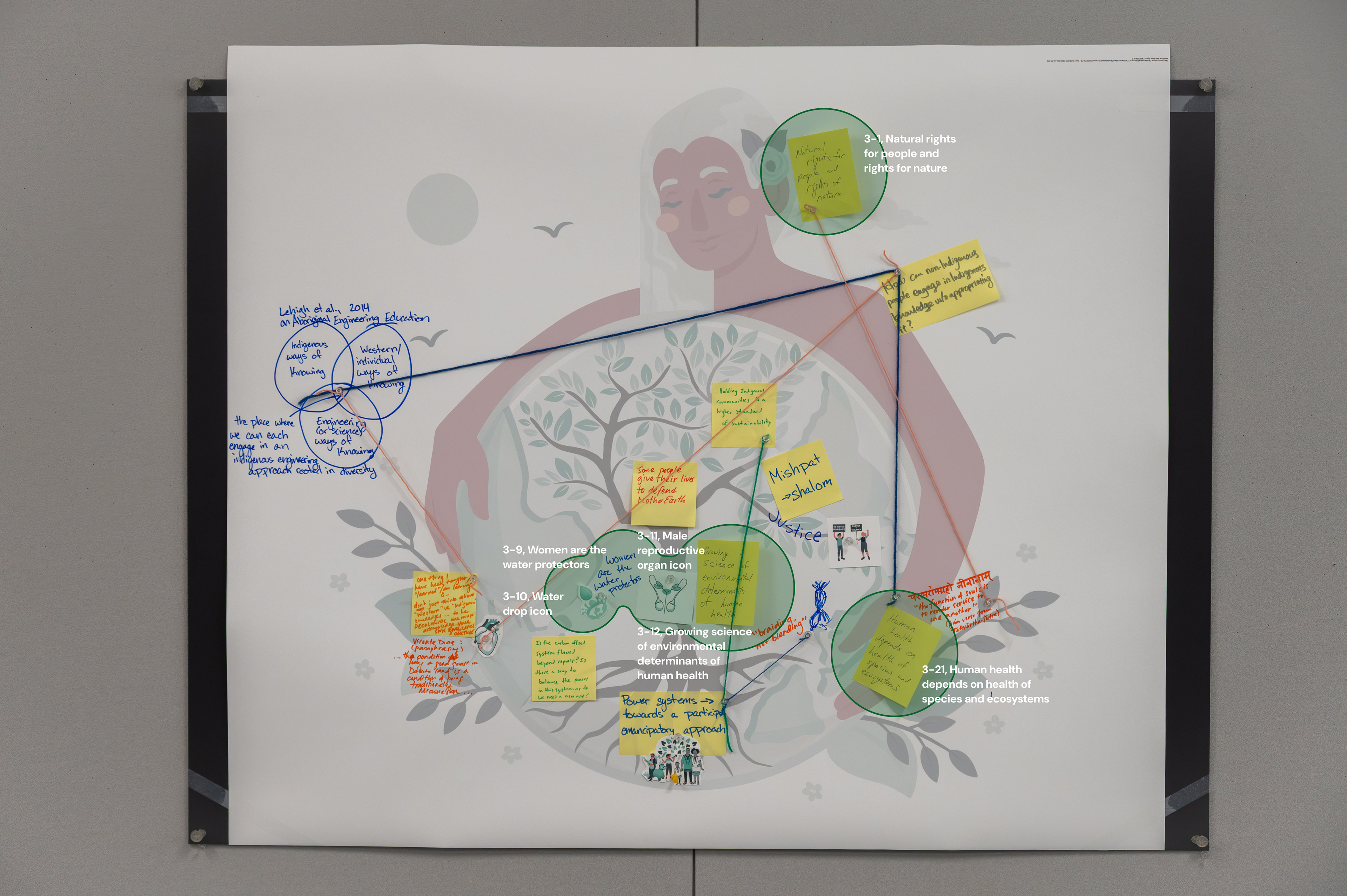
C3_Interconnectedness & Relationality
Interconnectedness & Relationality
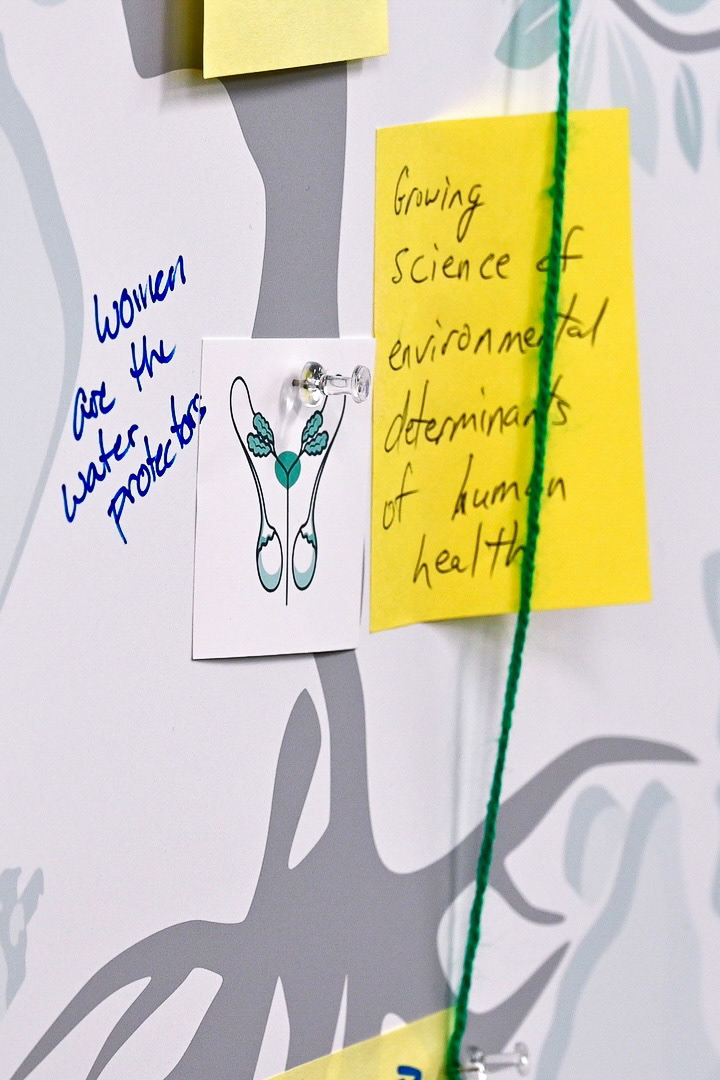
- Human/body-nature connection: co-dependence of human health and ecological health, human rights and natural rights
- Gender aspect of climate change: gender-based violence in climate coloniality, feminist care, and women water protectors
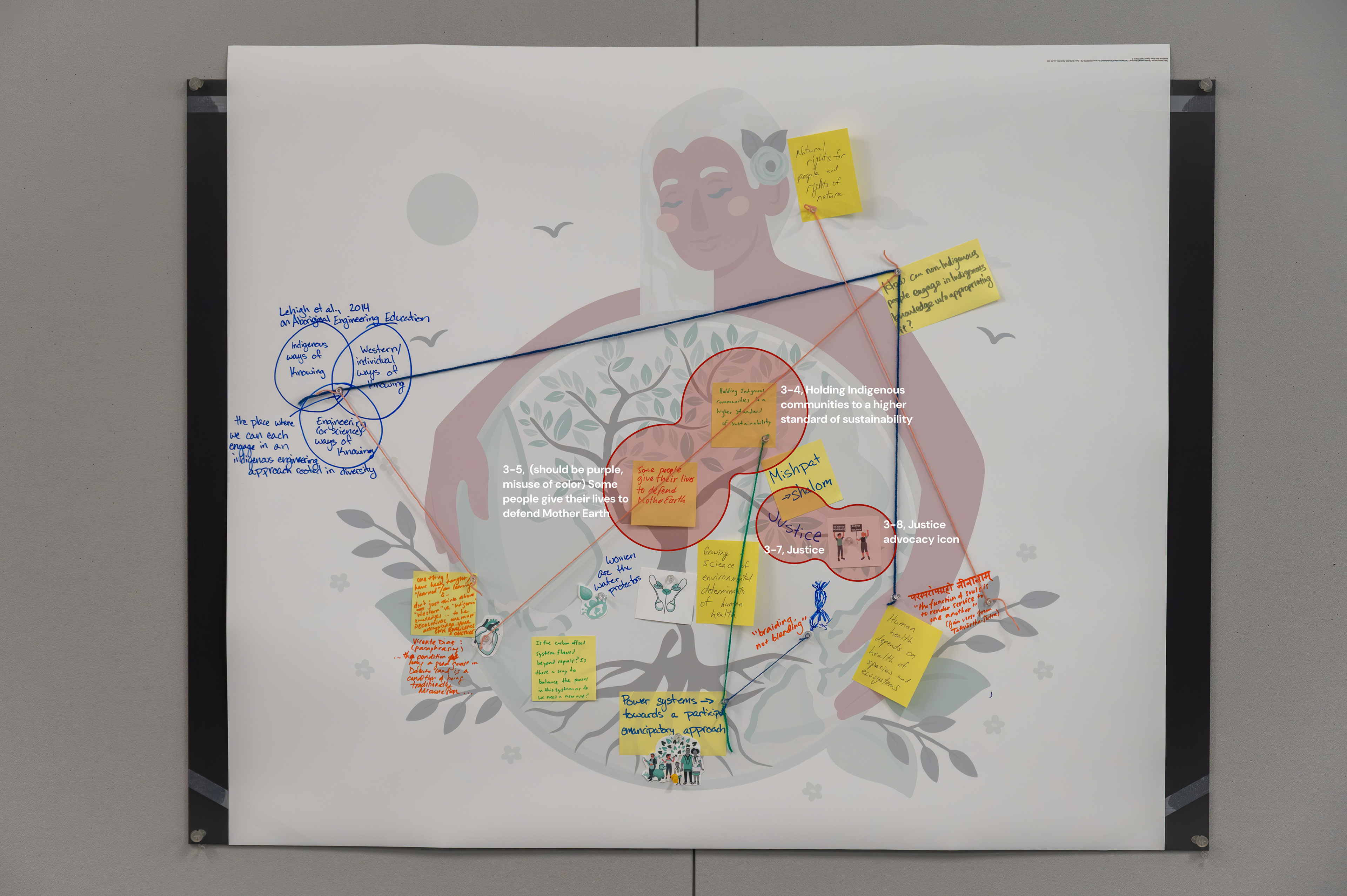
C3_Justice & Equity
Justice & Equity
- Violence and conflicts: deaths of environmental defenders for protecting Mother Earth; damaging the Earth is the same as killing the mother
- Caution against the over-romanticization of indigenous peoples as environmental warriors
- Disproportionate accountability and expectations over the Indigenous community
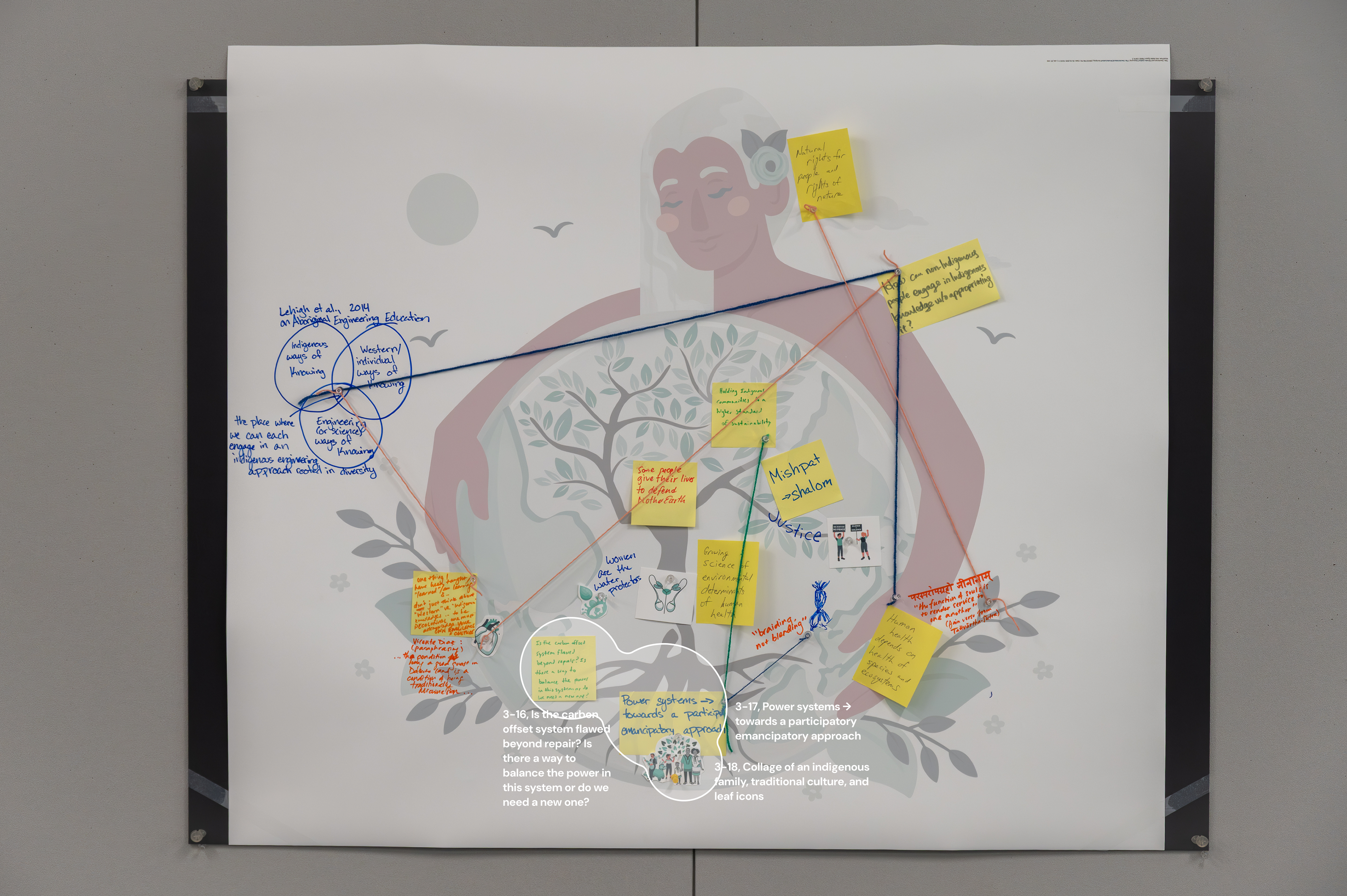
C3_Disruption & transformation
Disruption & Transformation
- Beyond carbon offsetting: questions about system maintenance and prospects for alternative approaches
- A pluriversal future lies in participatory and emancipatory approaches that disrupt the existing power system
- Towards a climate justice future that centers on Indigenous livelihood, conviviality, and care
Discussion
So, where is the decolonial climate justice future, and is it even possible? As Escobar reminds us, “another possible is possible.” Yet realizing it requires breaking free from the epistemological and ontological confinement of what he calls the “One-World World” (OWW), the belief that there is only one reality, shaped and governed by Western modernity and its colonial logics. (Escobar, 2020)
This participatory mapping workshop offers one possible response. It reveals three key insights:
1. Interconnectedness: ecological, social, and economic systems, human and non-human worlds, and all beings are interdependent and inseparable.
2. Embodiment and emotion: feelings, bodily experiences, and lived realities constitute vital epistemic data for understanding climate change critically and justly.
3. Decoloniality: participatory, collaborative, and place-based methods foster spaces where diverse voices are heard, respected, and valued, countering the colonial patterns of silencing and exclusion.
Finally, it is important to recognize that this methodology is neither perfect nor sufficient, nor should it be. Knowledge production, social transformation, and decolonial disruption cannot occur in isolation but through ongoing collaboration, solidarity, and relational practice. This work contributes one small yet meaningful piece of the larger mosaic, a collective effort to map pathways toward a pluriversal future.
Workshop Photo Gallery